

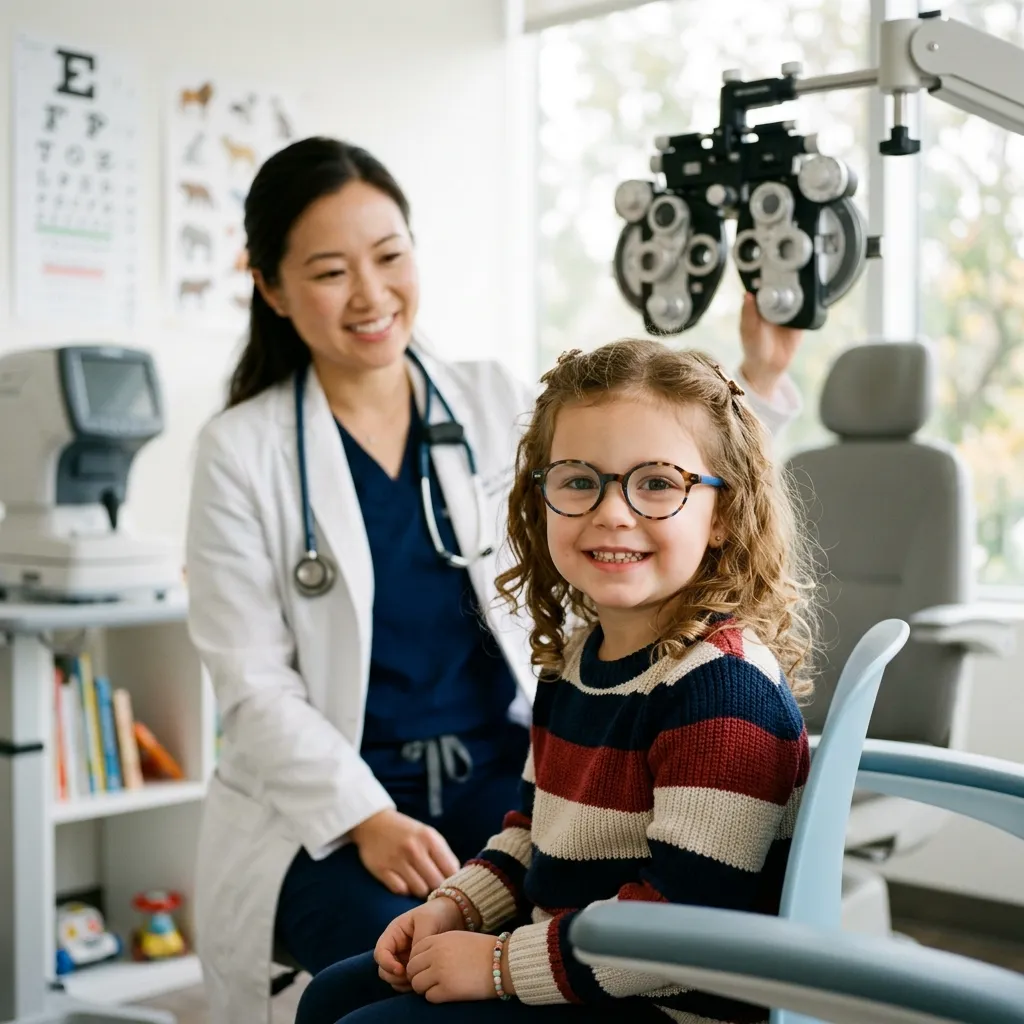
Vision development in childhood is largely completed between the ages of 0-7. The brain learns to see at these ages. Minor refractive errors (hypermetropia, myopia, astigmatism) or focusing problems that cannot be detected during this critical period can lead to permanent lazy eye (amblyopia). Lazy eye is a serious syndrome that becomes almost impossible to treat after the age of 10.
Tablet and Phone Addiction: The Digital Myopia Epidemic
Today, the fact that children spend a large majority of their time looking very closely at tablet, phone, and computer screens triggers pseudo-myopia, termed the "Myopia Epidemic" in the medical world. Spasms of intraocular muscles caused by constantly focusing near convert into permanent myopia diseases in advanced ages.
Don't Forget the 20-20-20 Rule
To limit the time children spend looking at screens and rest their eyes, the 20-20-20 rule is golden: Every 20 minutes, for 20 seconds, focusing on an object 20 feet (about 6 meters) away relaxes the eye muscles.
When Should an Examination Be Done?
- Immediately after birth (ROP examination especially for premature babies)
- First comprehensive screening at age 1
- Visual acuity examination at ages 3 and 5
- Just before starting primary school
Even if there are no complaints, regular examination of children by an expert pediatric ophthalmologist is one of the most fundamental duties of parents.